How Search Generative Experience (SGE) & AI Overviews Change SEO in 2026
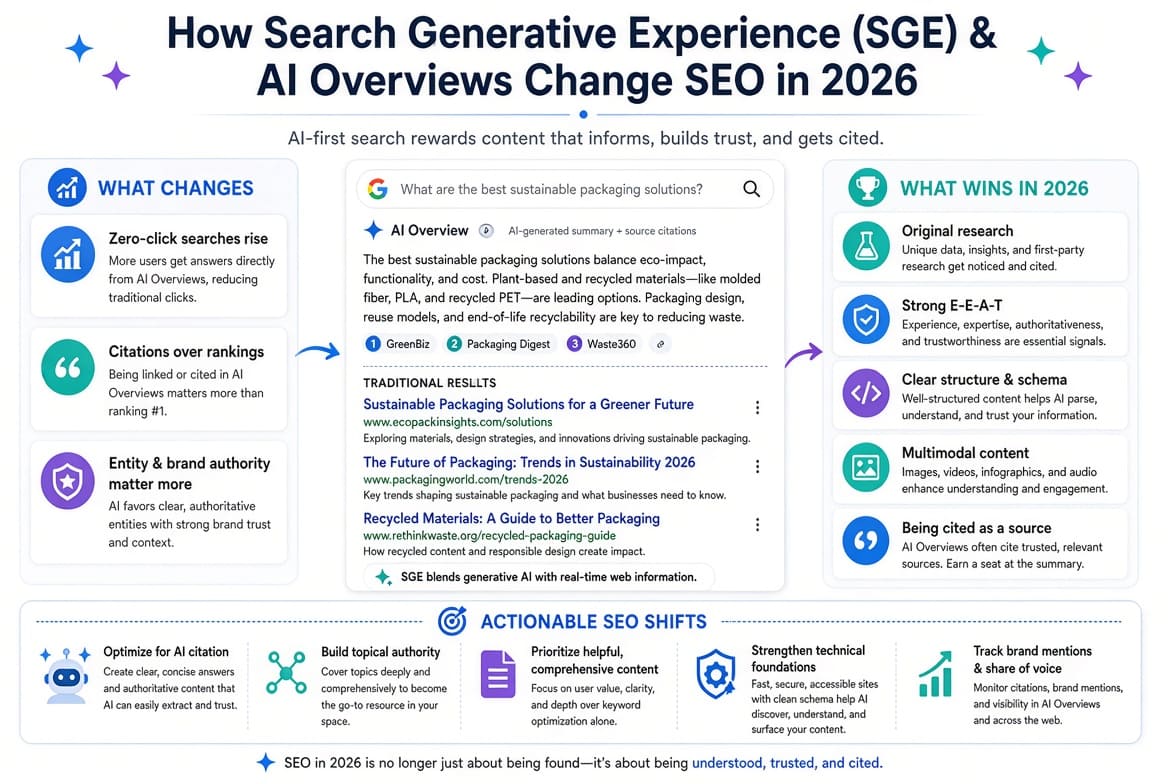
Organic search discovery has undergone a fundamental transformation. With Google embedding AI Overviews directly at the top of Search Engine Results Pages (SERPs) globally, the days of relying exclusively on traditional 10-blue-link layouts are over.
For web platforms, modern search engine optimization is no longer just about optimizing for clicks; it requires adapting to Generative Engine Optimization (GEO), a framework designed to ensure your content is indexed, synthesized, and cited directly inside AI-generated answers.
┌────────────────────────────────────────────────────────────────────────┐
│                  SERP EVOLUTION: TRADITIONAL VS. AI                    │
├──────────────────────────────────┬─────────────────────────────────────┤
│ Traditional SERP (Pre-2024)      │ Modern AI SERP Layout (2026)        │
├──────────────────────────────────┼─────────────────────────────────────┤
│ 1. Sponsored Ads                 │ 1. Interactive AI Overview Box      │
│ 2. Featured Snippet              │    (Synthesized Multi-Source Answer)│
│ 3. Organic Link #1               │ 2. Linked Citation Carousel Cards   │
│ 4. Organic Link #2               │ 3. "People Also Ask" Accordions     │
│ 5. Organic Link #3               │ 4. Traditional Organic Rankings     │
└──────────────────────────────────┴─────────────────────────────────────┘
1. Understanding Search Engine Retrieval Mechanisms in AI Search
To rank inside Google's AI Overviews or platforms like Perplexity, web teams must understand how AI search engines assemble their answers:
- Query Intent Classification: The search engine evaluates the query to determine if an AI Overview adds value. Informational queries ("how to fix INP bottlenecks") trigger AI answers far more frequently than pure transactional queries ("buy iPhone online").
- Real-time Document Retrieval (RAG): The system issues behind-the-scenes search queries to pull high-ranking, highly relevant web documents matching the user's intent.
- Synthesis and Extraction: Large Language Models summarize key facts across those retrieved web pages, compiling a unified summary while linking out to primary sources via inline citation cards.
If your content does not pass the retrieval phase, your platform loses organic exposure to zero-click search experiences.
2. Core Pillars of Generative Engine Optimization (GEO)
To rank inside AI Overviews, content strategies must focus on authoritative formatting and structural clarity.
1. Direct "Answer-First" Content Formatting
AI engines prioritize content that directly answers search queries without unnecessary introduction.
- Inverted Pyramid Style: Structure every core section by stating the core answer or definition in the very first sentence. Follow up with supporting technical details, contextual nuances, code snippets, or performance data.
- Clear Semantic Headers: Use clear, descriptive headings (
##,###) containing target search queries to help AI parsers map document relationships easily.
2. High-Density Information & Direct Citations
LLMs favor high-information content over generic fluff.
- Include Hard Facts and Data Points: Articles supported by verified metrics, benchmarks, original data, or explicit code implementations are cited far more frequently than shallow summaries.
- Use Structured Data Markup (Schema.org): Implement detailed JSON-LD schema structures (
TechArticle,FAQPage,Organization,HowTo) across your codebase. Structured data gives AI crawlers explicit semantic context about your content, authors, and organization.
JSON
{
  "@context": "https://schema.org",
  "@type": "TechArticle",
  "headline": "How Search Generative Experience (SGE) Changes SEO in 2026",
  "author": {
    "@type": "Organization",
    "name": "Intelliminds Technologies"
  },
  "description": "An architectural guide to Generative Engine Optimization (GEO) and AI Search Overviews."
}
3. The Role of E-E-A-T and Authoritative Entity Association
In AI-driven search, Google relies heavily on its Experience, Expertise, Authoritativeness, and Trustworthiness (E-E-A-T) guidelines to decide which sources to cite in AI Overviews.
- First-Hand Demonstrations & Case Studies: AI engines prefer content that reflects real-world experience over generic summaries. Incorporate first-person operational examples, architectural diagrams, and real-world execution metrics into your articles.
- Building a Consistent Brand Entity: Ensure your company, key team members, and authors maintain consistent citations across external web entities (Crunchbase, GitHub, LinkedIn, industry publications, podcasts). When search models recognize your organization as a verified domain expert, your content is more likely to be featured in generated responses.
4. Adapting KPI Metrics for the Zero-Click Search Era
Because AI Overviews resolve many search queries directly on the results page, overall organic click-through rates (CTR) on high-volume informational keywords have dropped globally. However, visitors who do click through from AI citation cards demonstrate significantly higher purchase intent and engagement.
Measuring Success in 2026:
- Track Citation Visibility: Monitor how often your domain appears inside AI Overview source carousels using advanced rank-tracking platforms (such as BrightEdge or Semrush AI Visibility tracking).
- Focus on Conversion-Oriented Organic Traffic: Shift focus from basic top-of-funnel impressions to tracking referral conversions, direct sign-ups, and user engagement metrics coming from long-tail search traffic.
- Target Non-Brand Informational Intent: Produce deep, highly specialized technical content that AI engines cannot easily summarize in a short paragraph. When users need detailed technical guides, implementation code, or specialized advice, they will click through to read the full source material.
Key Takeaway for Digital Growth
Optimizing for AI search engines does not mean abandoning traditional SEO best practices. Fast technical architecture, mobile usability, clear structured data, and high-density, expert-led content remain the foundation of search visibility. By aligning your platform's content architecture with modern AI retrieval patterns, you can capture high-intent organic traffic in the era of generative search.
Related Articles