
AI Automation for Small Businesses in Kenya: Practical Ways to Cut Costs and Boost Sales in 2026
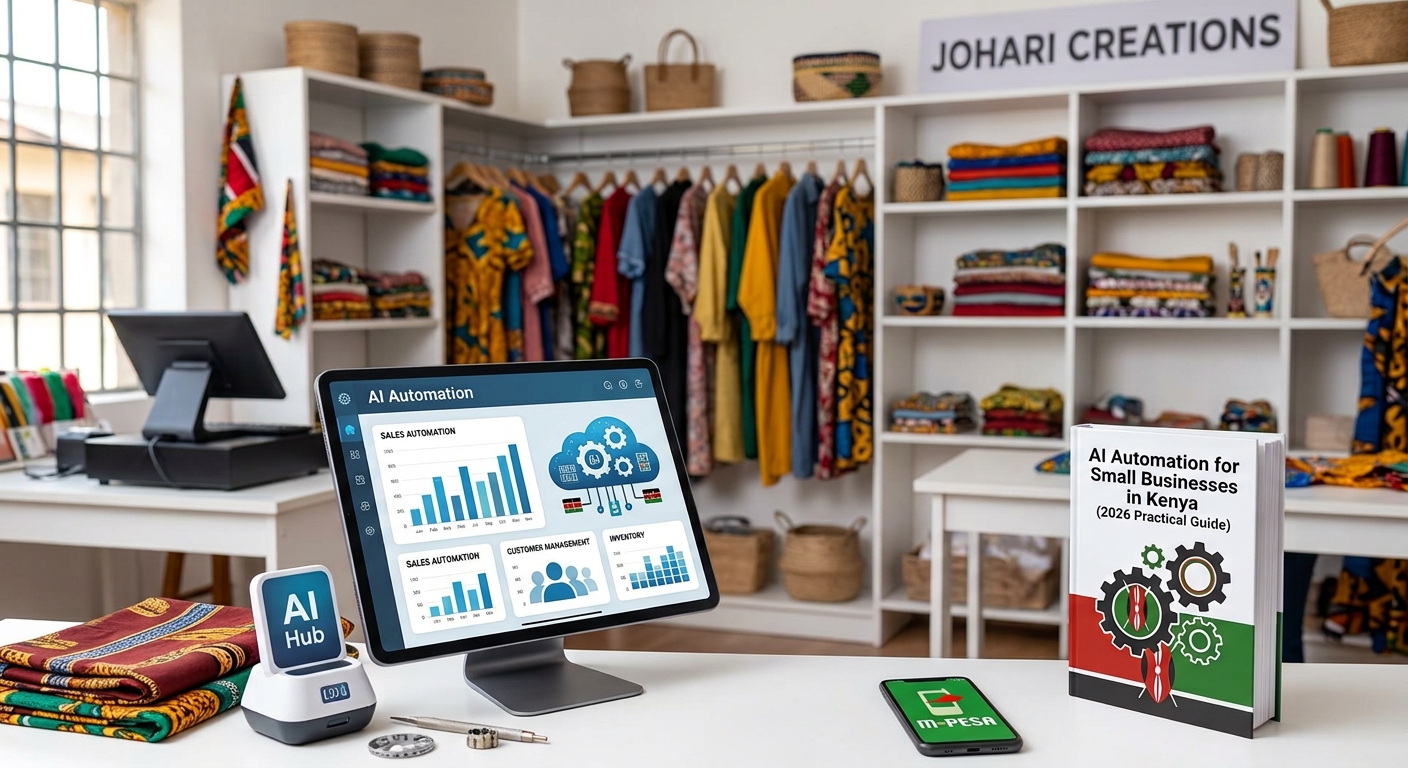
If you run an SME in Kenya today, you know the pressure. Between navigating tax adjustments, managing tight cash flows, dealing with reliable staff retention, and answering customer WhatsApp messages late into the night, staying competitive is exhausting.
For a long time, small business owners thought Artificial Intelligence (AI) and automation were reserved for big tech firms, banks, or multinationals with huge IT budgets. That is no longer true.
In 2026, AI automation isn't about expensive robots or complex enterprise software. It is about simple, intelligent digital workflows that handle repetitive daily tasks freeing you up to grow your business, serve your clients, and keep your operational overhead ridiculously low.
Here is a practical, grounded guide on how Kenyan SMEs are using AI automation to save money, streamline operations, and drive real revenue today.
Why Kenyan SMEs Need AI Automation Right Now
Operating a small business in cities like Nairobi, Mombasa, Nakuru, or Kisumu comes with distinct local dynamics. Kenyan consumers expect instant responses on mobile channels, seamlessly integrated M-Pesa payments, and zero delays.
When your business relies entirely on manual effort, severe bottlenecks happen quickly:
- Missed Customer Inquiries: A prospect asks for pricing on WhatsApp at 9:00 PM. If nobody replies within 10 minutes, they move on to your direct competitor.
- Manual Data Entry Errors: Manually updating stock levels, copying MPesa transaction codes into spreadsheets, or creating invoices takes hours of valuable human effort.
- Inconsistent Follow-ups: Leads fall through the cracks because sales teams forget to follow up with quotes sent three days ago.
AI automation acts as a 24/7 digital engine behind your business handling routine tasks without fatigue, human error, or additional monthly payroll expenses.
4 High-Impact AI Automations Any Kenyan Business Can Build Today
You do not need to rebuild your software infrastructure overnight. The best approach is targeting high-friction areas in your daily operations.
1. Automated Customer Support & Instant WhatsApp Sales
WhatsApp is the lifeblood of Kenyan business communication. However, relying on a human team to reply to every basic inquiry like location, operating hours, product catalogs, or price checks wastes endless time.
How the Automation Works:
By pairing conversational AI tools with official WhatsApp Business APIs, your business can deploy an intelligent assistant that understands natural English and Swahili queries.
- The Result: When a client asks, "How much is a delivery to Westlands?" or "Do you have medium sizes in stock?", the AI reads your current product database and answers instantly. If a customer is ready to buy, the AI pushes them directly to checkout or alerts a human team member to close the deal.
2. M-Pesa & Accounting Integration Workflows
Manual payment verification is one of the biggest time-wasters in SME operations. Matching M-Pesa confirmation codes against customer orders or Excel ledgers manually leads to operational delay and accounting mistakes.
How the Automation Works:
Using automated backend workflows (via custom API webhooks or automation engines like Make and custom Node.js scripts), incoming M-Pesa Till or Paybill notifications automatically:
- Reconcile against open invoices in real time.
- Mark orders as "Paid" in your database or CMS.
- Automatically send an SMS/Email receipt and delivery dispatch note to the client.
No manual verification required, zero friction for the buyer, and perfectly clean accounting records.
3. Automated Lead Capture & Follow-Up Campaigns
Most small businesses lose potential revenue not because their products are bad, but because they fail to follow up consistently.
How the Automation Works:
When a prospective client fills out a contact form on your website or sends a inquiry via social media, AI automation routines instantly:
- Score the lead based on their requirements and urgency.
- Log their details automatically into a simple CRM.
- Trigger a personalized 3-part email or WhatsApp follow-up sequence over the next 5 days.
If the lead responds, the system notifies your sales team immediately. If they don't, the automation handles the gentle follow-up sequence automatically.
4. Smart Inventory & Stock Level Management
Running out of your best-selling items mid-week costs real money. On the flip side, over-ordering stock ties up critical working capital.
How the Automation Works:
Instead of relying on manual end-of-week stock counts, smart inventory scripts monitor real-time sales trends. When stock levels for a specific product drop below a predefined threshold, the system automatically drafts a purchase order for your supplier and notifies the business owner for one-click approval.
How to Get Started with AI Automation Without Overspending
If you are ready to introduce automation to your business, follow this straightforward 3-step roadmap:
Step 1: Audit Your Biggest Daily Bottleneck
Do not try to automate everything at once. Write down the top 3 repetitive tasks that take up most of your team's time every single day. Is it replying to WhatsApp messages? Generating invoices? Sending quotes? Pick one friction point to solve first.
Step 2: Choose Low-Code Tools or Partner with Local Engineers
Many simple automations can be built using accessible tools like Zapier, Make, or native software integrations. However, if your business relies on local payments (M-Pesa), specialized databases, or custom web architectures, partner with experienced local software developers who understand the Kenyan tech ecosystem.
Step 3: Test, Measure, and Scale
Run your automation alongside your manual process for one week to verify accuracy. Measure how many hours your team saves and how much faster your customer response time becomes. Once validated, expand automation into your next operational bottleneck.
The Bottom Line
AI automation is not about replacing human workers, it is about empowering your small business to operate with the speed, accuracy, and efficiency of an enterprise-level company.
While your competitors spend their days manually verifying payment codes, copying data across spreadsheets, and letting WhatsApp leads go cold overnight, automated businesses are closing sales instantly and scaling effortlessly.
Related Articles