
If you are a business owner in Kenya, Uganda, Tanzania, or anywhere in East Africa, you have probably asked yourself this exact question: how to advertise my business online?
It is the right question. Your customers are online. They are searching on Google, scrolling on Instagram, chatting on WhatsApp, and watching videos on TikTok and YouTube. If your business is not visible where your customers spend their time, you are invisible to the people who would happily pay for what you offer.
But the online advertising landscape can feel overwhelming. Google Ads. Facebook Ads. SEO. Influencer marketing. Where do you start? What actually works for a business in Nairobi, Mombasa, Kampala, or Kigali? And how do you avoid burning money on strategies that will not deliver?
At IntelliMinds Technologies, we help businesses build their digital presence from the ground up. This guide answers the question how to advertise my business online in a practical, actionable way, specifically for East African entrepreneurs and SMEs.
Step 1: Start With a Digital Foundation: Your Website
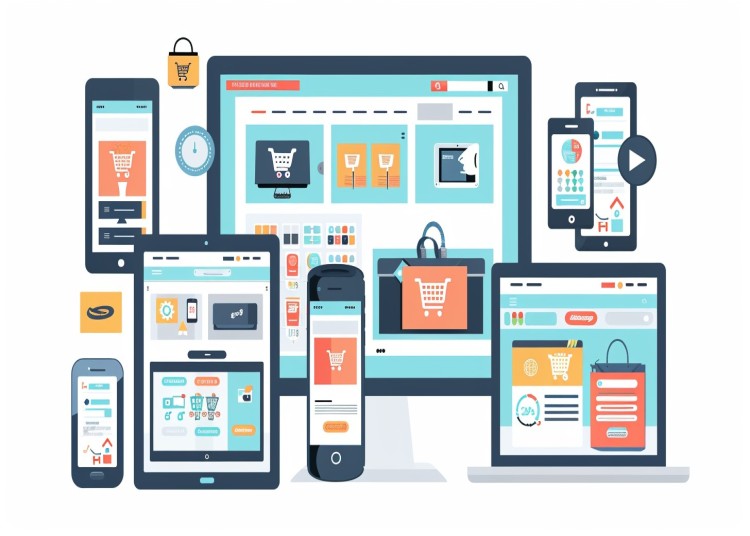
Before you spend a single shilling on advertising, you need somewhere to send people. For most businesses, that means a professional website.
A website is the only online asset you fully control. Social media platforms change their algorithms. Accounts get suspended. But your website is yours. It is where potential customers learn about your products, understand your credibility, and take action — whether that is calling you, placing an order, or booking a service.
Your website should include:
-
A clear explanation of what your business does and who it serves.
-
Your contact information: phone number, email, and physical location.
-
Testimonials or case studies that prove you deliver results.
-
A clear call to action, "Call us," "Get a quote," "Order now."
If you do not yet have a website, or if your current website is outdated, slow, or does not look professional on a phone, this is where you start. IntelliMinds Technologies builds websites designed for Kenyan businesses, fast, mobile-friendly, and optimised to convert visitors into customers.
Step 2: Get Found on Google: Search Engine Optimisation (SEO)
When someone in Kenya searches for a product or service you sell, you want your business to appear in the results. That is what SEO makes possible.
SEO is the process of optimising your website so Google understands what you offer and ranks you higher than your competitors. It is not about tricks. It is about creating content that answers the questions your customers are asking.
Practical steps:
-
Identify the search terms your customers use. A salon in Nairobi might target "best salon in Kilimani." A hardware supplier in Mombasa might target "building materials Mombasa." These are the keywords you build content around.
-
Ensure your website loads quickly and works perfectly on mobile phones. Most Kenyan users browse on their phones. Google penalises slow, desktop-only sites.
-
Create pages for each of your main services, each targeting a specific keyword.
-
Ensure your business is listed on Google Business Profile so you appear in local search results and on Google Maps.
SEO takes time typically three to six months to see strong results but it builds a foundation of free, sustainable traffic that compounds over time.
Step 3: Use Google Ads for Immediate Visibility
If SEO is the long game, Google Ads is the shortcut. With Google Ads, your business appears at the very top of search results for the keywords you choose and you only pay when someone clicks your ad.
For a business asking how to advertise my business online and wanting results quickly, Google Ads is one of the most direct answers.
Best practices:
-
Start small. You do not need a massive budget. Even KES 10,000 to KES 20,000 per month can generate meaningful leads if your targeting is tight.
-
Target specific, intent-driven keywords. "Buy office furniture Nairobi" is better than "furniture" because the person searching already wants to buy.
-
Direct each ad to a dedicated landing page, not your homepage. If someone clicks an ad for "laptop repair," they should land on a page about laptop repair.
-
Track everything. Know which keywords generate inquiries and sales, and which ones waste money.
Step 4: Build Your Presence on Social Media
Social media is where your customers spend hours every day. But effective social media advertising is not just about posting. It is about strategy.
Facebook and Instagram Ads: The Meta advertising platform allows you to target users by location, age, interests, and behaviour. A restaurant in Nairobi can target people within 5 kilometres who are interested in dining out. A fashion brand can target women aged 18 to 35 who engage with fashion content.
WhatsApp Business: In Kenya, WhatsApp is not optional. It is where customers ask questions, place orders, and expect quick responses. Set up WhatsApp Business with a catalogue of your products, automated greeting messages, and quick replies for common questions.
TikTok: For businesses targeting younger audiences, TikTok offers organic reach that is difficult to find anywhere else. Short, authentic videos showcasing your product or service can generate significant attention without paid spend.
LinkedIn: For B2B businesses selling to other companies, LinkedIn is the most effective platform for building professional credibility and generating leads.
The key across all platforms is consistency and authenticity. You do not need to be everywhere. Pick one or two platforms where your customers actually are, and do them well.
Step 5: Leverage Influencer Marketing: The Local Way
In Kenya, influencer marketing works differently than in Western markets. You do not need a celebrity with millions of followers. You need trusted voices within your target community.
A small restaurant might partner with a local food blogger with 5,000 engaged followers. A beauty brand might work with a few micro-influencers who post honest reviews. These partnerships often cost far less than traditional advertising and generate more trust because the recommendation comes from a real person.
Step 6: Email and SMS Marketing: Direct and Personal
Email marketing remains one of the highest-return channels available. Build a list of customers and prospects, then send them valuable content not just sales pitches. A monthly newsletter with tips, updates, and offers keeps your business top of mind.
SMS marketing, while regulated, can also be effective for time-sensitive offers and reminders, especially in markets where SMS open rates exceed email.
Common Mistakes to Avoid
Many businesses diving into online advertising make the same errors. Knowing them in advance saves money and frustration:
-
Spending without a clear offer. You need a specific, compelling reason for someone to click and take action.
-
Ignoring mobile users. If your website or ad landing page does not work perfectly on a phone, you are wasting your ad budget.
-
Not tracking results. If you do not know which channel generated a sale, you cannot improve.
-
Trying to be everywhere at once. Spreading a small budget across five platforms means none of them perform. Focus.
How IntelliMinds Technologies Helps
At IntelliMinds Technologies, we do not just write about digital advertising, we build the platforms, websites, and software that make it work. If you are asking how to advertise my business online, we can help you with:
-
Professional website design and development optimised for Kenyan users.
-
Search engine optimisation to help your business rank on Google.
-
Guidance on digital advertising strategy tailored to your industry and budget.
-
Custom software solutions that support your online sales, booking, or customer management processes.
We are based in Kenya, and we build for African businesses.
Partner with Us Today